Water Heater Not Heating? Gas and Electric Checks That Find the Cause
Quick Answer
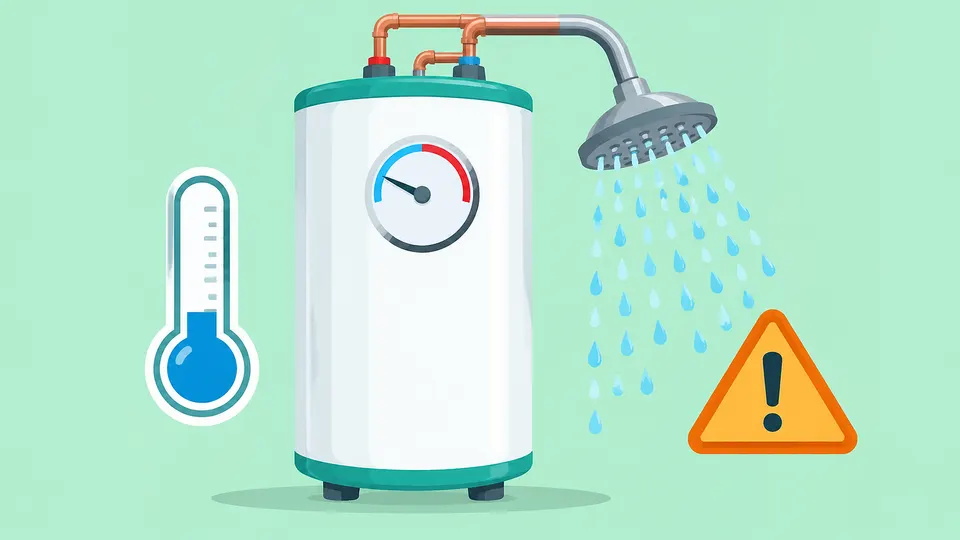
When a water heater gives no hot water, start with what you can safely check: the breaker on an electric tank, the gas supply and other gas appliances on a gas tank, open or leaking faucets, and the temperature setting. If a reset trips again, the pilot will not stay lit, or anything smells of gas, stop and call a licensed professional. Gas smell means leave first.
On this page
- Is your water heater electric or gas, and why does it matter?
- What should you check first when there is no hot water?
- Why is my electric water heater not heating?
- Why is a gas water heater not heating?
- What if the water is hot, but not hot enough or it runs out fast?
- When should you call a professional?
- Frequently Asked Questions
- Our Take
- Sources
Key Takeaways
- Check the free causes first: tripped breaker or fuse, open or leaking hot faucets, a low temperature setting and, on gas models, whether other gas appliances work.
- On an electric tank, reset the breaker once and wait 30 to 60 minutes. A breaker or red reset button that trips repeatedly means a failed part, so call a plumber.
- On a gas tank, follow your label for any pilot relight and stop after a couple of tries. Never open the burner area, adjust gas pressure or bypass a sensor.
- Elements, thermostats, 240-volt wiring, gas valves and ignition systems are professional repairs.
- If you smell gas, leave the home and call 911 and your gas utility from outside.
Is your water heater electric or gas, and why does it matter?
A tank water heater makes hot water one of two ways. An electric model uses heating elements on a 240-volt circuit. A gas model uses a burner lit by a pilot flame or an electronic igniter, and it needs a working gas supply. The checks that find the cause are different, and so is the line between what you can do and what belongs to a professional.
Look at the label on the tank or the pipes going into it. A gas line with a shutoff valve and a vent pipe leaving the top means gas. A thick electrical cable going into a box on the side means electric. This guide covers standard storage tanks. Tankless models have their own error codes; look yours up in our error code lookup and browse all water heater guides, including Rinnai and Rheem pages.
Manufacturers draw the same line. A.O. Smith's service flowchart for electric tanks starts with whether power is reaching the heater, and its pilot guide says a gas heater whose pilot will not stay lit cannot warm the tank [1] [4].
What should you check first when there is no hot water?
Before blaming a part, rule out the simple causes. GE Appliances lists the likely reasons a water heater delivers no hot water or too little, and several need no tools [2]:
- Power or fuel. On an electric model, look for a blown fuse or tripped breaker. GE's fix is to replace the fuse or reset the breaker once, and to call the electric utility if the power is out.
- Faucets. GE lists open or leaking hot water faucets as a cause. Close every tap and make sure nothing is running.
- Temperature setting. GE says a water temperature set too low can leave you short of hot water, and the cure is to raise the setpoint.
- Winter. GE notes that colder incoming water takes longer to heat, which is expected and can be handled by raising the setpoint.
- Swapped connections. If the unit was just installed or serviced, GE lists reversed hot and cold connections as a cause.
Start with the power or gas supply and the faucets, because those checks are free and cover the most common causes. Then follow the decision chart below.
Why is my electric water heater not heating?
Electric tanks have a short list of failure points: the breaker, a safety cutoff, the heating elements and the thermostats. A.O. Smith's service flowchart says a technician starts by checking for 240 volts at the upper thermostat, and if it is missing, the problem is the circuit breaker or wiring [1].
Check the breaker. Switch off the water heater breaker fully, then back on once. Lennox says to wait 30 to 60 minutes afterward, then check for hot water [3]. A breaker that trips again is a fault, not a nuisance. Leave it off and call an electrician or plumber.
The reset button. Most electric tanks have a red reset button behind the upper access panel. It belongs to a safety device often called the ECO (energy cut-off). A.O. Smith says that if the button clicks when pressed, the water heater got too hot and tripped the cutoff [1]. GE also lists a tripped manual reset high limit as a cause of no hot water [2].
Pressing it is a job some owners do, but behind that panel are live 240-volt connections. Lennox's steps start with switching the breaker off, then removing the panel and pressing the button until it clicks [3]. If you are not comfortable, or the unit is hot or smells burnt, stop and call a licensed plumber. Do this only once. If the reset button or the breaker trips repeatedly, do not keep resetting it; that points to a failed element or thermostat that needs a professional. Lennox lists repeated tripping, a burning smell or any leak as reasons to call a licensed contractor [3].
Elements and thermostats. If power and the reset are fine, the likely culprits are a failed heating element or thermostat. A.O. Smith's technician flowchart tests element resistance, and notes that the lower thermostat does most of the work, so it is the one more likely to fail [1]. Testing these parts means disconnecting wires and using a meter on a 240-volt appliance. We treat that as a professional repair.
Why is a gas water heater not heating?
The first questions are whether gas is reaching the heater and whether the burner is lighting.
Check the supply. Make sure the shutoff valve on the gas line to the heater is open, and see whether other gas appliances, such as a range or furnace, work. Lennox suggests this check, and says that if other appliances are also dead, you should contact your gas provider right away [5].
The pilot light. On pilot models, A.O. Smith says a pilot that will not stay lit means the water heater cannot heat the tank. It says most pilots can be relit by a homeowner following the instructions on the heater's label, and it says that if the pilot still will not stay lit you should contact a local service provider [4]. We do not walk through relighting here, because the steps differ by model; follow your label or owner's manual exactly, and wait the time it specifies before any relight attempt, which A.O. Smith puts at at least 10 minutes for the lines to clear [4].
Stop after a couple of tries. Lennox advises against repeated quick relight attempts, and says that if the pilot goes out right after you release the button, a thermocouple problem is likely and a licensed contractor should take over [5]. A.O. Smith says a faulty control valve or ignition system usually needs a service visit [4].
What not to do. Do not open the burner area, adjust gas pressure, remove parts or bypass a sensor. Those are gas technician jobs, and mistakes here cause gas leaks and carbon monoxide.
If you smell gas, leave the home immediately and call 911 and your gas utility from outside, such as from a neighbor's house. PHMSA, the federal pipeline safety agency, also says not to use light switches, garage door openers or a phone near the leak, and to avoid anything that could make a flame or spark [6]. A.O. Smith's guide gives the same rule: do not continue if you smell gas [4].
What if the water is hot, but not hot enough or it runs out fast?
If the heater works but runs short, the cause is often not a failed part. GE lists these [2]:
| Cause GE lists | What it means | Who handles it |
|---|---|---|
| Temperature set too low | The setpoint is below what you need | Owner: raise the setpoint |
| Cold inlet water in winter | Colder water takes longer to heat | Owner: raise the setpoint |
| Open or leaking hot faucets | Hot water is draining as it heats | Owner: close or repair the tap |
| Long or exposed hot pipe runs | Heat is lost on the way to the tap | Owner: insulate the pipes |
| Damaged dip tube | Cold water mixes in near the top | Installer or plumber |
| Connections reversed | Hot and cold plumbed backward | Installer or plumber |
Raising the setpoint can raise scald risk and energy use, so change it a little at a time and use the owner's manual for your model's controls.
When should you call a professional?
Use this rule of thumb: you check supplies, switches and settings; a professional handles anything inside the cabinet that carries 240 volts or gas.
| Symptom | Likely area | Next step |
|---|---|---|
| Breaker trips again after one reset | Wiring, element or thermostat | Leave it off; call an electrician or plumber |
| Reset button trips repeatedly | Element, thermostat or high-limit | Plumber |
| Pilot will not stay lit after a couple of tries | Thermocouple, control valve or ignition | Licensed plumber or gas technician |
| Other gas appliances are also off | Gas supply | Gas utility |
| Smell of gas | Possible leak | Leave the home, call 911 and the gas utility from outside |
| Burning smell, noises or a leak | Several possible faults | Switch off power, call a plumber |
| No hot water on a unit with an error code | Model specific | Look up the code, see the manufacturer |
If you are in a rental, tell the landlord or property manager rather than opening the heater yourself. Our editorial policy explains how we source our guides, and our dryer not heating guide uses the same gas and electric safety rules.
Frequently Asked Questions
Why is my water heater not heating even though the breaker is on?
An on breaker does not guarantee 240 volts at the heater. The reset button (ECO) may have tripped, or an element or thermostat may have failed. Reset the breaker once, wait up to an hour, and if there is still no hot water, call a plumber rather than testing live wiring.
How long should a water heater take to heat after a reset?
Lennox says to wait 30 to 60 minutes after resetting an electric heater before checking for hot water. Gas heaters recover on their own schedule and vary by size, so check your owner's manual.
Can I relight my own pilot light?
A.O. Smith says most pilot lights can be relit by a homeowner who follows the instructions on the heater's label. If you smell gas, are unsure or the pilot will not stay lit, stop and call a licensed professional.
Our Take
Our Take: We think most "no hot water" calls start with something simpler than a bad part, and the free checks are worth ten minutes: faucets, the breaker, the setpoint and the other gas appliances. We would stop at the cabinet door. On an electric tank, one reset is reasonable with the breaker off, but a repeat trip means a part has failed. On a gas tank, we would never trade a few minutes of savings for gas work. A.O. Smith and Lennox both point to a service visit when a pilot will not stay lit. Because instructions vary by model, your own manual and label come first.
Sources
- Standard Electric - No Hot Water (service flowchart). A. O. Smith.
- Water Heater - Not Enough or No Hot Water. GE Appliances.
- How to reset a water heater. Lennox.
- How to light a pilot light. A. O. Smith.
- Water heater pilot light keeps going out. Lennox.
- Recognizing and Responding to Pipeline Emergencies. PHMSA (U.S. DOT).
Repair information is general guidance. Unplug the appliance and shut off water or gas before working on it, follow your owner's manual, and call a qualified technician for gas, refrigerant or high-voltage work. Spotted an error? Tell us.
Related Fixes
Tankless Water Heater Installation Cost: Gas, Electric and Retrofit Prices
Tankless water heater installation cost: reported price ranges, what drives them (gas, electric, venting, permits, removal) and how to decide repair or replace.
How Long Do Water Heaters Last? Lifespan by Type and Warning Signs
How long do water heaters last? See tank and tankless lifespan ranges from DOE and manufacturers, warning signs, and when to repair or replace yours.
Water Heater Replacement Cost: What You Will Pay and Why
Water heater replacement cost explained: national price ranges for tank, tankless and heat pump units, what labor, permits and venting add, and when to repair.
Tankless Water Heater No Hot Water: Flow, Gas, Vent and Error Code Checks
Tankless water heater giving no hot water? Check flow rate, the cold water sandwich, gas valve, vent and error codes, and see which fixes need a gas technician.
Water Heater Pilot Light Won't Stay Lit: Causes and When to Call a Pro
Water heater pilot light won't stay lit? See the common causes, the few safe checks, how to relight per your label, and when to call a licensed pro.
Rheem Tankless Code 11: Ignition Failure Explained
Rheem tankless code 11 means the burner did not light. See what Rheem's manuals say, which gas and vent checks are safe for you, and when to call a technician.