Dryer Squeaking? How to Find the Noise and Fix It
Quick Answer
Run the dryer empty for a minute. If the squeak stops, the load is too heavy or something in it is rubbing. A squeak in the first few seconds is normal. A squeal or screech that lasts the whole cycle with an empty drum usually means a worn belt, idler pulley, drum rollers or glides. Level the dryer and tighten loose screws first; stop using it and book service if the noise continues.
On this page
- What kind of noise is your dryer making?
- Is a squeaking dryer ever normal?
- What can you check yourself before calling for service?
- Which part is squeaking: belt, idler pulley, rollers or drum glides?
- Can you fix a squeaking dryer yourself?
- Why shouldn't you keep running a squeaking dryer?
- Frequently Asked Questions
- Our Take
- Sources
Key Takeaways
- Run the dryer empty first. If the noise stops, lighten the load and check for zippers, coins and buttons.
- A short squeak at start-up and a thump that fades as a cold dryer warms up are normal, according to GE and LG.
- A steady squeal or screech with an empty drum points to the belt, pulleys, drum rollers or a dry drum shaft.
- A thump on every turn suggests a damaged belt; metal scraping suggests worn drum slides (glides). Both need service.
- Leveling the dryer, tightening its feet and exposed screws, and checking the lint chute are safe owner checks. Unplug first, and leave gas lines to a technician.
What kind of noise is your dryer making?
Name the sound before you blame a part. A squeak, a thump and a scrape point to different parts, and two of the common sounds are normal. Start with one free test: take the clothes out and run the dryer empty for about a minute.
If the noise stops with an empty drum, the load is the cause. Samsung says squealing, squeaking or grinding usually happens when the load is too heavy, and that a thump with clothes inside can come from an overloaded drum or from items hitting the drum wall [4]. If the noise keeps going with nothing inside, Samsung says to request service [4], and the table below tells you which part is the likely suspect.
| What you hear | When | Likely cause | What to do |
|---|---|---|---|
| Short squeak | First few seconds after Start | Normal start-up sound | Nothing, unless it keeps going |
| High-pitched sound | At start or when the drum reverses | Belt tightening (LG) | Nothing, it is normal |
| Thump | Start of a cycle after the dryer sat unused or cold | Flat spots on rubber rollers | Nothing, fades as the drum warms |
| Squeak that starts once the dryer heats up | Mid-cycle | Loose cabinet screws (GE) | Tighten exposed screws |
| Steady squeal or screech | Whole cycle, empty drum | Belt, pulleys, worn rollers, dry or loose drum shaft | Stop and book service |
| Thump on every turn | Whole cycle, empty drum | Frayed or damaged belt | Stop and book service |
| Metal scraping | Whole cycle | Worn drum slides, or an object in the front seal | Stop and book service |
| Rattle or tapping | Only with clothes | Zippers, buttons, coins | Empty pockets, turn items inside out |
Sources for each row are in the sections below. If your dryer is also slow to dry, read our dryer not heating guide too, because worn parts and lint problems often show up together.
Is a squeaking dryer ever normal?
Yes, for a few seconds. GE Appliances lists "a squeak when the dryer is started" as a normal sound and says to contact service only if it continues past the first few seconds [5]. LG describes the same thing: a brief high-pitched sound at start or when the drum reverses, caused by friction as the drum belt tightens [2].
A thump at the start of a cycle can be normal too. LG says that if the dryer sits in a cold area, is not used often, or has a load left inside for a long time, the rubber rollers that support the drum can become temporarily misshapen; as the drum warms up, the flat spots regain their shape and the thumping fades [3].
A short squeak at start-up or a thump that fades after a few minutes is normal. A squeal, thump or scrape that lasts the whole cycle with an empty drum is not.
If you have an LG dryer that also shows a code, check our LG dryer D80 code guide or look the code up in the error code lookup.
What can you check yourself before calling for service?
These checks need no tools beyond a level and a screwdriver, and none of them involve opening the cabinet. Unplug the dryer first. For a gas dryer, also leave the gas line alone: if the dryer has to be pulled out or disconnected to reach the feet, in our reading that is a job for a qualified technician.
- Lighten the load. Samsung says to stop the cycle and reduce the weight of the load when you hear squealing, squeaking or grinding. Its test for a normal load is about four wet towels; if the noise still happens at that weight, request service [4]. Spinning clothes longer in the washer also makes the load lighter (same source).
- Empty the drum and the pockets. Whirlpool lists zippers, buckles, buttons, rivets, coins and pens as items that make noise as they tumble, and says to check pockets before washing [1]. LG adds keys and suggests fastening zippers and turning items inside out [2].
- Level the dryer and tighten the feet. Speed Queen calls an unlevel dryer one of the likeliest causes of squeaking, and says loose feet can squeak even on a level dryer, so tighten them and listen again [6]. Samsung says to retract the leveling feet completely, then adjust only as much as needed with a level [4].
- Tighten loose cabinet screws. GE lists squeaking that develops after the dryer heats up and says the cause is loose cabinet screws; check all exposed screws and tighten them [5].
- Check the lint screen and lint chute. Whirlpool says small objects can fall into the lint chute housing and hit the blower wheel, so remove the lint screen and look inside the housing. It also recommends always running the dryer with the lint screen installed [1].
If the dryer is quiet after these checks, you are done. If it still squeals or thumps with an empty drum, the sound is coming from a part inside the cabinet.
Which part is squeaking: belt, idler pulley, rollers or drum glides?
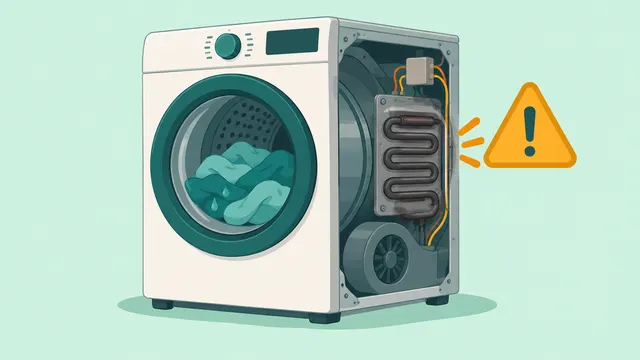
In a typical belt-drive dryer, a long belt wraps around the drum and runs to a small pulley on the motor, with an idler pulley keeping it tight. Rollers support the drum, and slides or glides hold up the front lip. The layout varies by brand and model, so treat the drawing below as a map, not a parts list.
Belt and pulleys. Whirlpool says that as a dryer ages, the belt and pulleys can wear and cause squealing sounds, and that an authorized service provider should confirm which parts need replacing [1]. In our reading, the idler pulley is a common suspect for a high squeal from the bottom of the cabinet, because it is small and spins fast. Whirlpool also says lint building up inside the dryer can make the belt and pulleys squeal, and that cleaning the inside may require a service call (same source).
Damaged belt. GE says a frayed or damaged belt makes a thumping sound and needs service [5]. Speed Queen's check is to look for a belt that is frayed, worn, stretched or cracked, with the work done by a technician [6].
Rollers and drum shaft. LG lists a squealing or screeching sound, "like metal scraping," and gives the causes as a loose drum shaft, hardened lubricant, or worn rollers or belt; it says to contact LG for service [2]. Speed Queen says lubricating drum rollers should be done by an appliance service technician [6].
Drum slides or glides. GE says metal scraping comes from foreign objects caught in the drum front seal or from worn or loose drum slides, and says to contact service [5].
| Part | Typical sound | What the manufacturer says |
|---|---|---|
| Drive belt | Squeal, or thump on every turn if damaged | Whirlpool, GE, Speed Queen: service |
| Idler and other pulleys | Squeal | Whirlpool: wear with age, service confirms |
| Drum rollers and shaft | Squeal, screech, or start-up thump when cold | LG: service if constant, normal if it fades |
| Drum slides (glides) | Metal scraping | GE: service |
| Blower wheel | Noise when an object falls into the lint chute | Whirlpool: check the lint chute |
Part numbers differ by model, so check your model number before you order anything, and see our brand pages for Whirlpool, Samsung and LG for more model-specific guides.
Can you fix a squeaking dryer yourself?
The outside checks are a homeowner job. Replacing a belt, idler pulley, rollers or glides means opening the cabinet and taking the drum out, and every manufacturer source used here sends that work to service. We rate this repair as moderate for experienced DIYers and a service call for everyone else.
If you do open the cabinet yourself, follow the service manual for your exact model, unplug the dryer before you remove any panel, and wear work gloves; Speed Queen recommends gloves to protect your hands [6]. Do not oil a squeaking part from the outside. In our reading, oil on a belt or pulley makes it slip and holds lint.
Gas dryers have one hard rule: do not disconnect or reconnect the gas line yourself. Call a qualified technician.
Why shouldn't you keep running a squeaking dryer?
A noise that keeps going is a part wearing out. GE says that if unusual noise continues after the basic checks, stop using the dryer until a qualified servicer inspects it, because continued use can cause more wear and higher repair costs [5]. Speed Queen gives the same advice: do not keep running a squeaking dryer, because it could cause damage [6].
There is also a fire angle when lint is involved. Whirlpool links squealing belts and pulleys to lint building up inside the dryer [1], and the U.S. Fire Administration reports that failure to clean was the leading factor in the ignition of home clothes dryer fires from 2018 to 2020, at 31% [7].
If a squeal comes with lint packed inside the cabinet, treat it as a cleaning job for a technician, not just a noise.
For more dryer problems, browse our dryer guides. If the washer is the noisy one, start with washer not spinning.
Frequently Asked Questions
Why does my dryer squeak only when it first starts?
A squeak in the first few seconds is usually the belt tightening as the drum starts to turn. GE lists it as a normal sound and says to call service only if it continues past the first few seconds. LG says the same sound can happen when the drum reverses.
Can I spray WD-40 or oil on a squeaking dryer?
We do not recommend it. The squeaking parts sit inside the cabinet, and in our view oil on a belt or pulley can make it slip and collect lint. Speed Queen says drum roller lubrication should be done by an appliance service technician.
Is it safe to keep using a squeaking dryer?
Not for long. GE says to stop using the dryer if an unusual noise continues after basic checks, because it can cause more wear and higher repair costs. Speed Queen gives the same warning. Unplug it and book service.
Our Take
We think most squeaking dryers get solved in one of two ways: a lighter load and a level cabinet, or a worn part inside. The empty-drum test is the cheapest diagnostic you have, and Samsung's four-wet-towels benchmark gives it a clear pass line. In our view, the manufacturers are right to send belts, pulleys, rollers and glides to service: the work means pulling the drum, and the sources we used all point to a technician. We would not keep running a dryer that squeals all cycle. GE and Speed Queen both warn it causes more wear, and if lint is packed inside the cabinet, the USFA fire data makes cleaning it a priority, not an option.
Sources
- Squealing or Squeaking Sound - Dryer. Whirlpool Corporation.
- [LG Dryer] Noise From the Dryer. LG Electronics.
- LG Dryer - Thumping Noise. LG Electronics.
- Samsung dryer is too noisy. Samsung Electronics America.
- Dryer - Noises. GE Appliances.
- What To Do About Your Dryer Squeaking. Speed Queen.
- Appliance and electrical fires. U.S. Fire Administration.
Repair information is general guidance. Unplug the appliance and shut off water or gas before working on it, follow your owner's manual, and call a qualified technician for gas, refrigerant or high-voltage work. Spotted an error? Tell us.
Related Fixes
Dryer Not Heating? Gas vs Electric Troubleshooting
Dryer not heating? Check the cycle, both breakers on an electric dryer, the gas shutoff valve on a gas dryer, then the vent. See which parts need a technician.
LG Dryer D80 Code: Clearing the Vent Blockage
LG dryer D80 code: the exhaust duct is about 80% blocked. Clean the lint filter, fix the duct, check the outside flap, and rule out gas supply on gas models.
Whirlpool Dryer Not Heating: What to Check
Whirlpool dryer not heating? Run Whirlpool's 5-minute heat test, rule out Air Only and Wrinkle Shield, check both breakers or the gas valve, then the vent.
Samsung Dryer Not Heating: Causes by Model Type
Samsung dryer not heating? Run Samsung's 30-second heat test, rule out Eco Dry and Air Fluff, reset the breaker or check the gas line, then test the vent.